Michael Nkambule Dies at 37 as Chiefs Crash Out of MTN8
You know that feeling when the timeline hits you with two truths at once, and your brain just refuses to process either one properly?
Chillers, pull up a chair and hold onto your drinks, because we have a story that demands we stop scrolling and actually listen.
The Weight of 37 Years
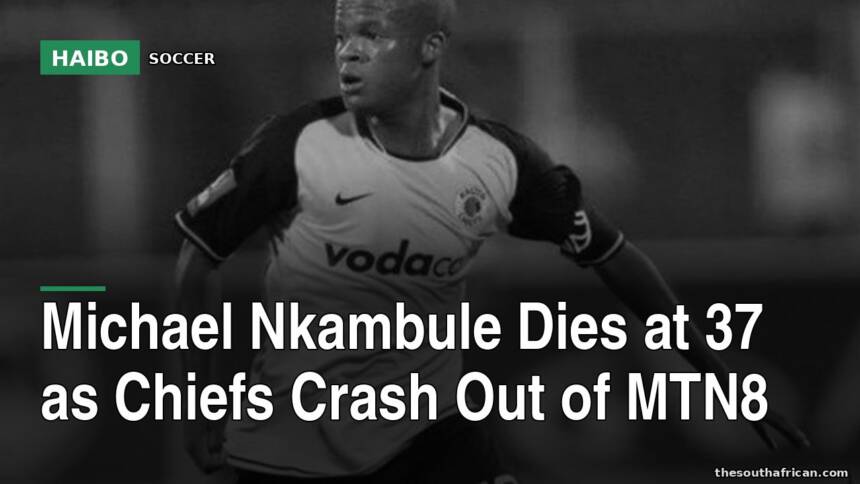
First, the heavy stuff. Michael Nkambule, a name many of us recognize from his time with Kaizer Chiefs, has reportedly died following a car crash. According to reports, he was only 37 years old(thesouthafrican.com). Mara. 37. You sit there thinking, ‘How?’ and ‘Why so soon?’ That number isn’t just a digit; it’s a reminder of how fragile life can be, regardless of whether you’re a superstar or just trying to get home safe.
My take is blunt: the entertainment and sports industries in this country often act like they exist outside the real world. They churn out content, schedules, and narratives as if nothing can derail them. But Michael’s passing forces a pause. It reminds everyone watching that behind the headlines, there are people who matter, and their absence leaves a hole that no headline can fill. I think we owe it to families like his to slow down and reflect, rather than treating every day like a rerun of yesterday’s drama.
But I could be wrong. Maybe I’m just nostalgic for a time when the game moved slower, though I suspect the business model would never allow that anyway.
We joke about load-shedding and traffic, but this kind of news hits harder. It stops the conversation. It silences the group chat. That’s the power of these moments. They remind us we’re all vulnerable. Michael Nkambule wore the badge. He represented us. When a representative falls, the whole tribe feels it. That’s why the number 37 sticks in your throat. It’s not just a former player; it’s a piece of the community gone too soon.
One Goal, One Exit, No Mercy
While the city grapples with that loss, the football action at FNB Stadium continued, and frankly, the timing felt almost cinematic in its cruelty. Kaizer Chiefs faced Golden Arrows in an MTN8 quarterfinal, and if you were looking for a silver lining, the result offered none.
Chiefs lost 1-0(sundayworld.co.za). The goal came from Khulekani Shezi, who didn’t even have to manufacture magic. The cross landed near him, and the ball went straight into the net(thesouthafrican.com). Sometimes the simplest moments define a match, and sometimes they highlight how unbalanced the scales can feel.
You see, Shezi just stood there, and the ball did the work. No fancy footwork, no dance steps. Just a cross and a rip-snorter into the net. It’s efficient, sure, but when you’re already hurting, efficiency feels cold. That single goal did the job: it eliminated Kaizer Chiefs from the tournament(sundayworld.co.za).
Being knocked out of the MTN8 means the dream is paused. There’s no second chance until next season, and even then, the doors are always locked tight. For a club with such a massive fanbase, an early exit stings, especially when the backdrop is this heavy. So now you have a club knocked out, and a community mourning. If you ask me, this combination of events highlights exactly why I side with the everyday fan over the corporate machine. We’re asked to flip emotions from grief to analysis in the span of a commute, and quite honestly, that takes a toll.
Who Carries the Cost?
The streets are saying that football should find a way to honor the departed, whether that means a moment of silence that lasts longer than the ad break or simply acknowledging that some days belong to memory, not metrics. Whether that’s a fair expectation or just idealism is up for debate, but the sentiment is loud.
Khugekani Shezi got his goal, and Michael Nkambule got his final resting place. Two stories colliding in Johannesburg on the same day. Passion has a shadow side. Every goal represents someone else’s defeat, and when the emotional stakes are this high, the defeats cut deeper. It’s not just about points anymore; it’s about shared experience.
Honest thought: I wonder if anyone at the top realizes that these juxtapositions create a fatigue that audiences are silently carrying. We love the game, but we also carry the weight of the reality behind it. Face card for Khulekani, rest for Michael, and a lot of questions about how we move forward.
Wait, wait, wait — is it my job to judge the schedule, or just report the results? I’ll leave that to the suits. For now, I’m just here with you, Chillers, processing the whiplash. Do you think the MTN8 schedule has become too aggressive, ignoring the human element of the sport, or is the competition format essential for exposing weaknesses?
Vote in the Facebook comments — results and your best takes become tomorrow's article.