Paris-Gail Isaacs Ties It Up Before China Claims 5-1 Victory
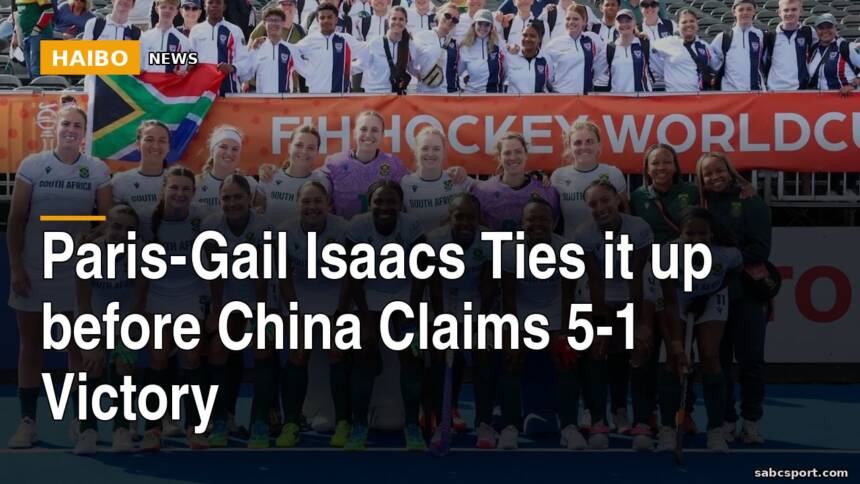
Jump straight into the timeline, Chillers, because we still haven’t fully processed how quickly a single equaliser turned into a five-goal statement.
My honest take is that the way this entire World Cup cycle has been packaged reads less like a serious investment in grassroots development and more like a tick-box exercise for corporate sponsors, but I could be wrong. You already know how these international setups usually operate — massive branding deals, heavy broadcast cuts, and then suddenly the athletes are expected to deliver podium-level consistency without the budget to match. Eish, it’s exhausting just watching the pattern repeat.
Here’s what actually went down in Pool D. Paris-Gail Isaacs stepped up and scored a penalty corner goal to tie the game against the China women’s hockey team. For a minute there, the energy shifted completely. Mara, the streets were saying we finally had the structure to hang with the top-tier squads, and honestly, it felt like we cracked the code. But then China took control, and the final score settled at 5-1.
So where do we go from here?
The defeat officially drops the South African women’s hockey team into the classification rounds for positions 9 through 16. There is no sugarcoating the math: we are fighting for placement now, not the knockout bracket. The camp packs their sticks and heads straight into a clash with Japan, a side sitting at world ranking 13.
If you look at the scheduling and travel logistics attached to this tournament, it absolutely feels like the industry is banking on the underdog narrative to carry ticket sales while quietly shelving long-term funding. That reads like a management strategy designed to minimise financial risk, even if it leaves the players doing all the heavy lifting. Wait, wait, wait — does that make the squad resilient, or does it just highlight a system that refuses to scale properly?
We don’t judge the hustle on the pitch, because anyone who has watched the training clips knows the physical toll is relentless. But when the backing stops matching the ambition, you have to call it out. A penalty corner goal shows tactical execution, and tying the match proves we can compete technically. Losing 5-1 after that simply exposes the gap between short-term preparation cycles and what elite international play actually demands.
Is the classification round a reset or a setback?
Honestly, facing Japan at world ranking 13 in the classification bracket isn’t a punishment, but it is a clear test of whether the camp can pivot quickly enough to salvage pride. The timeline is already debating whether the coaching staff should prioritise defensive solidity or keep pushing high-press tactics against a faster Asian side. Either way, the players are still carrying the weight of the jersey while the boardroom figures out the next funding wave.
Bring your arguments, dog. Do the classification matches offer enough competitive value to justify the travel costs, or should the federation redirect those resources straight into youth academy pipelines instead?
Sources: Sabca Sport, gSport.
Vote in the Facebook comments — results and your best takes become tomorrow's article.