Pitso Breaks Tradition, Names 3 Bafana Captains
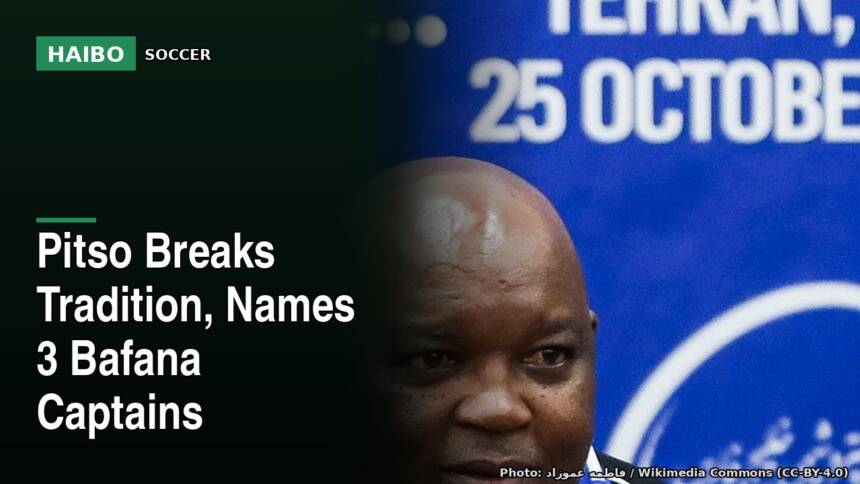
The timeline has been buzzing since Pitso Mosimane stepped up to announce a major shift in how Bafana Bafana will be led, and if you ask me, the move to appoint 3 captains immediately raises eyebrows. Mara, sharing the armband sounds nice in theory, but in the trenches, does it actually create clarity or just noise? I’ve been turning it over, and while my initial instinct screams ‘too many bosses’, there’s a case to be made that this reflects a deeper trust in the group’s maturity.
Nah, but listen, Chillers — we’re talking about a complete overhaul of the leadership model here. Mosimane isn’t just picking names; he’s sending a signal that the single-captain era is officially out. If you look closely, this reads as a strategy to distribute the weight of responsibility. My bet is that Pitso believes having multiple leaders prevents the team from relying on one voice, ensuring resilience even when the spotlight burns hot. That said, I could be wrong, and some of us might find ourselves confused about who gives the orders during a tense match. But hey, innovation requires risk, and Mosimane clearly isn’t afraid to challenge the status quo.
According to reports from idiskitimes.co.za, Mosimane has selected Ronwen Williams, Themba Zwane, and Sipho Chaine to serve as the trio of leaders, explicitly stating he does not support a single-captain system [source: idiskitimes.co.za]. This decision puts faith in experienced heads who understand the jersey’s value. By naming Ronwen, Themba, and Sipho, the coach is highlighting versatility in leadership styles, suggesting that each brings a unique strength the squad needs. You tell the story of why these three were chosen over others, but the message is loud: unity will come from collective ownership, not one person carrying the load alone.
Mofokeng Gets the Spotlight
While the leadership shake-up grabs the front page, the treatment of Relebehile Mofokeng deserves serious attention too. Mosimane didn’t just whisper about Mofokeng; he publicly praised the midfielder and confirmed the player will have an increased role with the national team [source: idiskitimes.co.za].
Face card for face card here. When a head coach backs a player to step into a bigger space, that’s a career-defining vote of confidence. I reckon this is the green light Mofokeng needed to know his contributions are valued at the highest level. Boosting a role like this often means the coach sees untapped potential, and if Mofokeng delivers, this moment could anchor his resurgence. The streets are saying the midfield engine is finally getting the fuel it craves, and I’m not arguing with that logic. It energizes the whole camp to see a player elevated, proving that hard work gets noticed and rewarded.
Selection Gets Tougher
Then came the reality check for anyone dreaming of easy access to the squad. Following the announcement of his first squad, Mosimane warned that future selection will become more challenging as more players come to his attention [source: sabcsport.com].
Eish, this is the part where the pressure really kicks in. A coach telling you the competition is about to heat up is standard manager speak, but if you ask me, this also reads as a subtle warning to those outside the circle: keep your boots laced. It sets the tone that spots aren’t handed out; they have to be fought for every time the list drops. That kind of environment raises standards, even if it keeps chillers refreshing the news feed hoping their boy’s name appears. It hints that Mosimane is keeping a sharp eye on talent, ready to upgrade the roster whenever he finds someone better, so the boys in the camp know the bar just went up.
The Missing Piece Arrives
To top it off, Mosimane revealed that a new goalkeeper coach will be announced soon, completing his technical staff which already includes assistant Morena Ramoreboli, performance analyst Musi Matlaba, and fitness coach Kabelo Rangoaga [source: sundayworld.co.za].
Wait, wait, wait — so the puzzle pieces are finally falling into place. Adding a dedicated goalie specialist suggests the backline is a priority area for improvement. My take is that this completes a thoughtful setup, giving the keeper unit the focused attention it demands. Goalkeepers can be the difference between a draw and a win, and ignoring that nuance would be negligence. With the staff taking shape, the foundation looks solid, though only time will show if this structure translates to results on the grass. It’s a professional approach that signals Bafana is building for the long haul, not just patching holes until the next tournament.
So, the structure is set, the staff is locking in, and the message to the squad is clear: competition is rising. We’ve got 3 captains to test, Mofokeng to watch, and a goalkeeper coach on the horizon. It’s a fresh chapter for Bafana, but the real proof will come when the ball is kicked. I want to hear from you, Chillers: is rotating the captaincy the smartest way to unify a squad, or does a nation need one undisputed leader to rally behind? Your thoughts decide the narrative.
Vote in the Facebook comments — results and your best takes become tomorrow's article.