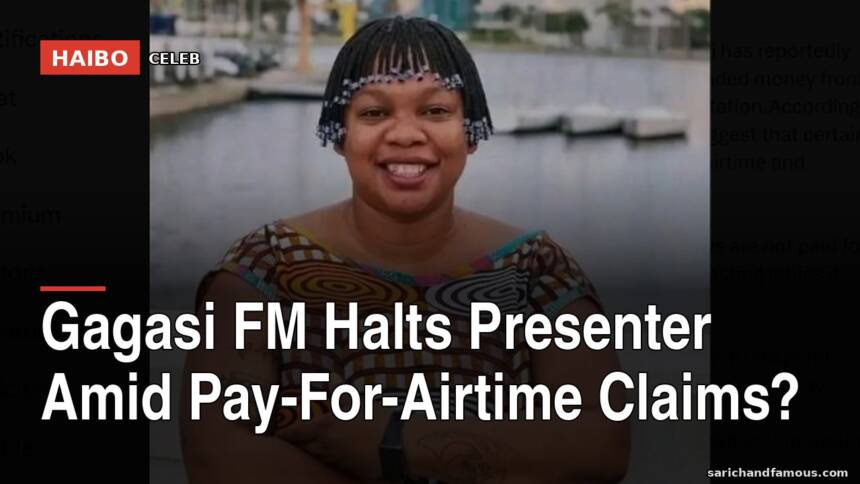
Gagasi FM Halts Presenter Amid Pay-For-Airtime Claims?
You know how we always complain that getting airtime feels like trying to kick down a velvet rope? Well, Chillers, the timeline just dropped a reminder that sometimes the bouncer is literally asking for a ticket right at the door. I’m looking at this whole situation and honestly, my first thought is that treating studio access like a side hustle reads less like networking and more like extortion, but I could be wrong.
The Suspension Hit Fast
Let’s keep it straight, because the noise online moves faster than a taxi rank during rush hour. Gagasi FM has placed their presenter, Ayanda Melansi, on suspension. Why? Because there are reports circulating that she allegedly required payment from people simply to arrange interviews or secure on-air appearances. The station confirms they are currently investigating the matter, which means nothing is officially proven yet. In my view, the speed at which management hit pause shows they’re treating this as a serious ethical breach, period.
Pay-To-Play On Air?
If these claims hold water, we are talking about a serious breach of standard broadcasting ethics. Radio isn’t a freelance marketplace where you negotiate rates for basic airtime, and my take is that monetising guest slots crosses a line that shouldn’t exist in ethical journalism. I don’t understand why we keep pretending the industry runs on pure merit when the reality often looks like a closed circuit. Mara, I’m fully aware we’re working with thin facts here, and suspension is just a procedural step while they sort out what actually happened behind closed doors. To me, the mere suggestion that access comes with a price tag reeks of bad practice, and that’s just my read on the situation.
What This Actually Means For Listeners
Here’s where I want to talk about the people actually stuck waiting for that callback. We’ve all been the freelancer refreshing our messages, hoping a host will pick up the phone so we can finally share our project, our band, or our community initiative. When access becomes transactional, it doesn’t just hurt one person’s ego—it quietly prices out everyday creators who don’t have deep pockets or industry favours calling in marks. It’s not clear whether this was a systemic issue at the station or an isolated decision made by one individual, but the damage to public trust happens the moment word leaks. I reckon that kind of friction pushes legitimate talent straight to private messaging apps where the rules disappear anyway, and frankly, I think that’s a win for gatekeepers.
Where Do We Draw The Line?
So where do we actually draw the line between healthy networking and straight-up gatekeeping? The streets are saying the industry needs to implement strict, non-negotiable audit trails for airtime allocation before sponsors start asking hard questions, but others argue that hosts should be allowed to market their own reach however they see fit. My bet is that without transparent guidelines, we’ll keep watching this exact same cycle play out until someone actually goes on record.
Tell me where you stand, Chillers: should stations implement strict, non-negotiable codes for airtime access, or is it ultimately the responsibility of freelancers to navigate the unspoken rules of the business? Drop your vote below and let’s argue until the comments section blows up.
Sources: Briefly.co.za | Sari Chand Famous
Vote in the Facebook comments — results and your best takes become tomorrow's article.