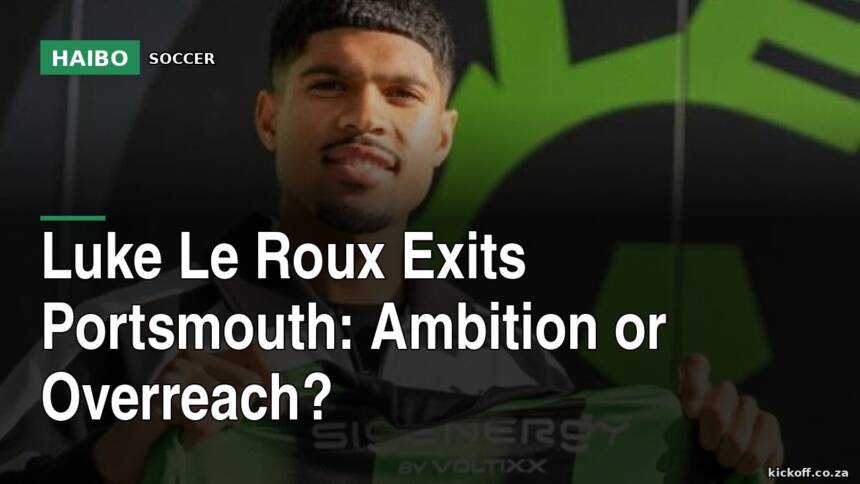
Luke Le Roux Exits Portsmouth: Ambition Or Overreach?
Nah, look, we were already arguing about why players keep treating European transfers like pop-up stalls when the timeline just dropped another plot twist. Chillers, let’s get one thing straight before the comments section burns down: I think this whole quick-exit drama reads less like ambition and more like a corporate clearance sale, honestly. But I could easily be reading too much into the silence.
That’s right, Bafana’s own Luke Le Roux was out of Portsmouth faster than most weekend plans, allegedly securing a fresh start at another European club according to reporting from Kickoff. The kind of movement that makes supporters clutch their wallets and wonder where the long-term vision actually went. You see, when a midfielder ghosts a promotion-chasing side and lands on his feet across the channel within days, the industry machine usually starts spinning stories about destiny. But my take is that it looks more like panic-driven logistics.
Why Does The Door Keep Swinging?
Portsmouth head coach John Mousinho allegedly expressed deep disappointment regarding the sudden departure, noting that the player himself apparently regretted the initial move, which Soccer Laduma highlights as a rare admission of misalignment. If you ask me, that double whammy—disappointment plus regret—sounds like a classic contract renegotiation gone loud, and I’m calling it what it feels like: a safety net being tested while everyone watches. Mara, clubs invest time, medical checks, and training ground space, not to watch a roster member treat the locker room like a layover lounge.
What Happens To The Trust?
I judge people who treat football careers like rental cars — return them scratched and expect a new set of keys without asking questions first. This isn’t about shaming anyone’s path, because obviously every athlete needs options. Yet I reckon the way these exits are framed matters. When coaches publicly note regret and networks quietly secure backup deals, the narrative shifts from sporting pursuit to transactional survival. And that, to me, is where the real friction lives. We side with the everyday fans who buy tickets expecting building squads, not watching turnover happen faster than seasonal menu changes.
Wait, hold up, though. I might be projecting my own frustration onto a situation I haven’t seen behind closed doors. Maybe the tactical fit was never there, maybe injuries forced the hand, or maybe the financial package simply outpaced the sporting logic. It’s not clear how much weight the board actually carries in these conversations, and I’m guessing the paperwork was already settled before the press conference even cooled down. Face card for face card, handling agent pressure is its own full-time job, and sometimes the exit door swings wide open on its own.
Still, the pattern sticks. Quick in, quicker out, and the usual voices spin it as bold ambition. Bring the receipts later, Chillers, but until then I’ll keep asking whether loyalty costs more than flexibility. The pitch doesn’t care about our debates, but the balance sheet definitely does. So tell me straight: should clubs lock down athletes with longer contracts to stop the revolving door, or is total freedom of movement exactly what keeps top talent hungry? Drop your side below, because this one’s splitting the timeline.
Reporting referenced here draws from Kickoff and Soccer Laduma.
Vote in the Facebook comments — results and your best takes become tomorrow's article.