Growing Dinner On Fields: The Farm Reality That Breaks My Brain
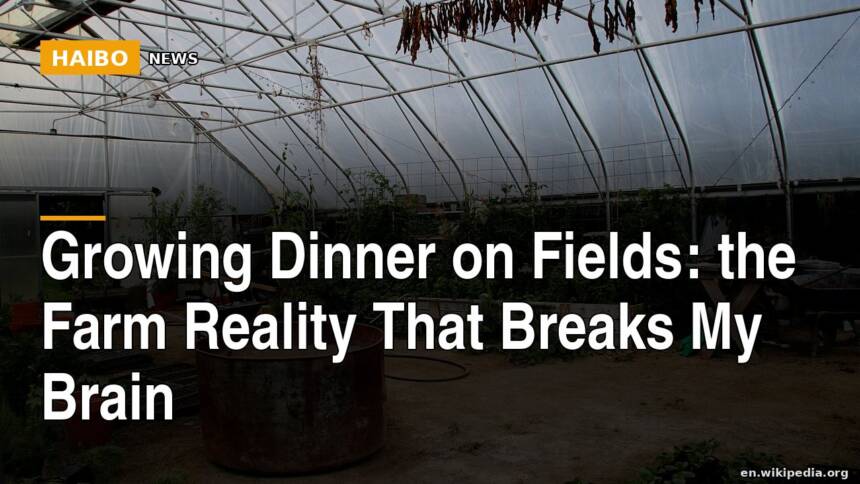
Hold on, someone actually divides a plot into perfect circles and carves it into wedge-shaped sections.
You see, Chillers, operators label these spots as pizza farms, and I am still trying to wrap my head around the concept.
My head spins trying to picture the logistics, because certain demonstration spots literally divide their property into perfect circles. The dirt gets carved into distinct triangular sections that look suspiciously like oversize pie slices.
From Soil to Sauce Without Leaving the Ground?
I cannot wrap my mind around the supply chain when the entire recipe begins as raw earth. They grow wheat right alongside tomato vines and herb patches. Honestly, watching crops turn into dinner breaks my brain.
They raise dairy cows for cheese and pigs for pepperoni, and I am still trying to process how livestock ends up on a menu like this.
No, no, no, we are not doing the math quietly. That level of self-sufficiency blows my budget away, since some locations even harvest timber just to stoke their brick ovens.
If relying on trees feels intense, certain parcels sit on actual coal seams. I constantly wonder how the ventilation handles burning natural gas deposits inside an oven.
Where Are These Places Actually Operating?
It gets absolutely ridiculous because these enterprises cluster heavily across northern American counties. Working kitchens definitely pop up in Minnesota, Wisconsin, and Iowa where owners manage both crops and livestock.
I am not okay with how many random towns now host these concepts under their own rooftops. Pleasant Grove operates out of Waseca, Hawkins Family Farm runs near North Manchester, and Old Germantown covers Germantown.
If you ask me, spreading this model across half the country breaks basic logic. I honestly cannot figure out why anyone thought this was a good idea, but the receipts are real.
Other locations stretch further outward, proving the model survives well beyond the heartland. The sheer number of addresses makes my phone scroll endlessly, and I am still trying to process it.
Amber Waves Farm handles orders in Amagansett, Luna Valley Farm supplies Decorah, and A to Z Produce anchors Stockholm. I just stare at the paperwork and realize modern farming got completely sideways.
Cobb Ranch in California and R Pizza Farm in Dow prove this works nationwide. Honestly, I still wonder how students manage all those ingredients without a proper kitchen, but the system somehow holds together.
Even classroom curricula apparently hijack this whole system for lesson plans. Agriculture in the Classroom Canada runs yearly programs where pupils grow their own pies alongside experimental burgers and fries plots.
We stress about grocery bills while somewhere a visitor literally watches crops become dinner. Tell me straight, would you trust a restaurant that sources its own dough, or does harvesting your own cheese feel like too much manual labour for a Friday night dinner?
Source: Wikipedia’s article on “Pizza farm”. The facts are theirs; the words are ours.
Vote in the Facebook comments — results and your best takes become tomorrow's article.