Three Armies, One Uniform: The WWII Soldier History Can’t Prove
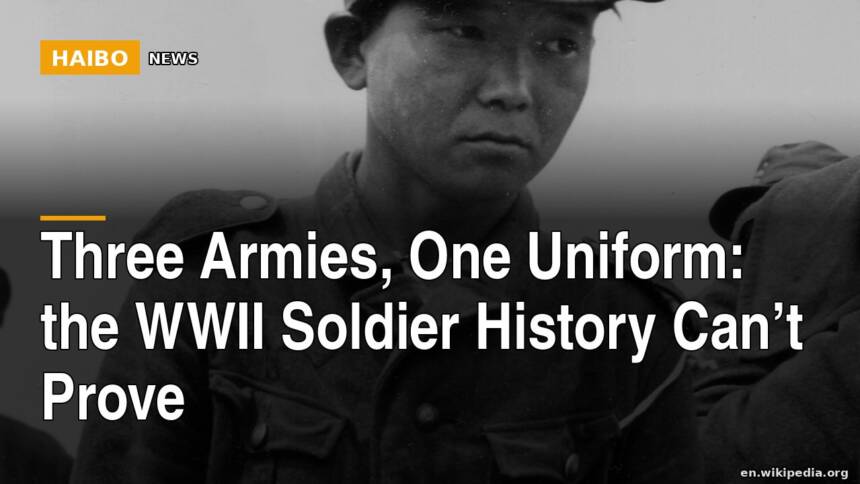
Wait, wait, wait — a man supposedly wore three enemy uniforms during World War II, even though experts still argue whether he actually walked the earth.
Pressed into colonial service in 1938, hauled into Soviet lines following 1939 clashes, then shuffled into enemy uniforms after December 1941. I am not joking when I say his military resume reads like a terrible road trip gone wrong.
A Soviet labour camp transfer put him on the Eastern Front, where marching orders flipped him toward eastern Ukraine by 1943. My mind completely breaks trying to track those sudden career changes across frozen battlefields.
The Photograph That Started A Global Mystery
After the June 1944 landings in France, an American airborne operator named Brewer located four fighters of East Asian descent wearing German gear near Utah Beach. He later told historian Ambrose that nobody could speak their language and they ended up as prisoners.
The military intake forms simply classify him as a young Japanese male, and the US National Archives preserves that exact wording to this day. Nobody knows what those four soldiers did after the war, but someone eventually slapped the name Yang onto the photograph.
I do not trust any story that starts with a guess and builds an empire on silence. The American officer never connected his patrol report to that specific image, leaving the historical record delightfully messy.
By 2002, regional news stations revived the captive account, and by 2004 the photograph began circulating worldwide. I cannot believe how quickly a blurry snapshot turned into a global obsession.
Readers instantly submitted fake biographical details, including settlement dates and release records that simply vanished. I find it wild that strangers felt entitled to invent a dead man’s entire life story.
Experts Argue Over Ghosts And Empty Files
American forces initially assumed these men were Japanese soldiers disguised in foreign gear. One of them was eventually sent to a prison camp in Britain, completely unaware of the tangled wartime paths that created the confusion. I love how wartime bureaucracy accidentally preserves mysteries for decades.
Several established defence analysts suddenly treat this mystery as settled truth, citing the same missing proof over and over again. Meanwhile, rival researchers examine the exact same documents and insist the entire figure never provided a shred of physical proof.
I sit here wondering why experts keep defending a ghost instead of admitting the gap. The national broadcaster aired a television special in 2005 that investigated every lead and ultimately found zero credible proof.
Other researchers argue the pictured individual actually belongs to the 795th Georgian Battalion operating beside German forces. That specific explanation offers a different origin, yet nobody can verify which face sits behind the legend.
Domestic press platforms later circulated invented birth records, transfer logs, and a manufactured retirement in Illinois where he reportedly expired in 1992. The journalist simply noted that readers provided absolutely no sources to back those claims.
I honestly cannot get over how fast that rumour spread before anyone checked the receipts. The story expanded so rapidly that a regional cinema producer invested 23 million dollars to dramatise the saga.
A local council member recently leveraged the tale for a property marketing push and faced immediate digital backlash. When fiction pays better than facts, I simply watch the circus roll by.
Original accounts suggest they might have been returned to Korea to join a later civil conflict, but the paperwork goes silent immediately. I refuse to pretend I know what happens after the record stops writing.
So Chillers, drop your read before the comments explode — would you rather believe the complete mystery of a man wearing three uniforms, or accept that the whole legend was just a clever internet collage?
Source: Wikipedia’s article on “Yang Kyoungjong”. The facts are theirs; the words are ours.
Vote in the Facebook comments — results and your best takes become tomorrow's article.