Scorpion Kings’ FNB Show: R200 Million Impact Or Too Much For Fans?
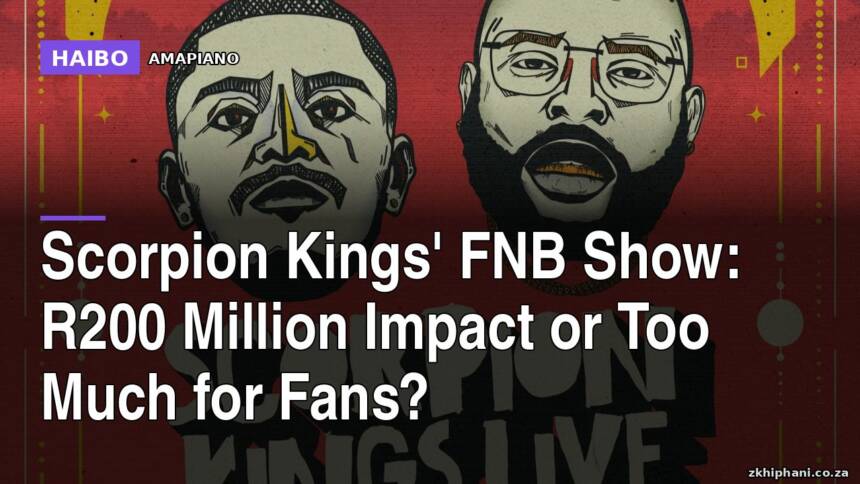
Marra, hold your applause because my calculator is literally smoking. If you ask me, the Scorpion Kings didn’t just walk into FNB Stadium in 2026; they kicked down the door and reminded everyone that live music isn’t entertainment anymore—it’s an economic engine that doesn’t ask for permission.
Did They Turn A Stadium Into A Bank Vault?
Let’s set the scene first, because the entrance game alone demands respect. DJ Maphorisa rolled up in a red Gusheshe like he was arriving at his own private reserve, and Kabza didn’t bother with a gentle warm-up—he sat behind a piano rigged with flames, which, to my eye, looks less like a musical cue and more like a safety inspection waiting to happen.
I think the industry has been underestimating the power of the duo for too long. When one outlet compiled 8 defining moments from the takeover, it wasn’t just a listicle; it was proof that every minute of that night felt like a reset button for the culture. My view is that if you appreciate detail, that works, but the streets noticed something else entirely.
The Money Talks Louder Than The Bass
We need to talk about the numbers, and no, I’m not doing this for the suits. Briefly reports that attendance exceeded 70,000 fans, which means the stadium was packed wall-to-wall with people who actually wanted to be there. My bet is that energy is what drives the next wave of investment, regardless of how the ticket structure lands with different groups.
Here’s where it gets wild: the show reportedly generated around R150 million in concert revenue. Now, I reckon that’s a serious flex, but the real story for the ordinary person hiding in these stats is the ripple effect. The same report noted an additional R49 million in visitor spending, pushing the total economic impact on Gauteng to nearly R200 million.
If you look closer, that R49 million isn’t just ghost money; it’s the taxi drivers hauling crowds, the hotels full for the weekend, and the local businesses catching a break. That, to me, is the kind of injection that makes a region breathe easier. My observation is that we often focus only on the headliner’s bank account, but when the impact hits R200 million, everyone at the party gets fed.
However, I could be wrong about the sustainability of this model. As the industry watches closely, the question becomes whether this scale can be repeated without pricing out the very fans who built the sound. My take is that the Scorpion Kings have raised the bar so high that other acts will now struggle to compete, and that pressure might force some promoters to cut corners next season.
Ultimately, my final verdict is simple: the Scorpion Kings delivered a spectacle that merged theatre, music, and massive financial returns into one package. Whether this sets a permanent standard or remains a rare peak depends on how the ecosystem adapts. But for now, the receipts are clear, and the mood in Gauteng is electric.
So, Chillers, be honest: does the Scorpion Kings’ ability to generate nearly R200 million prove that local artists finally command global-level economics, or are we heading toward a future where stadium shows become exclusive clubs for the wealthy few?
Vote in the Facebook comments — results and your best takes become tomorrow's article.