Why Stellenbosch FC Won’t Tap Into Remgro’s Billions
Jump straight into the middle of the chat, Chillers, because if you think modern football funding models actually care about your wallet, this latest boardroom move just proved you’re still dreaming.
The Money Talks Are Finally Clear
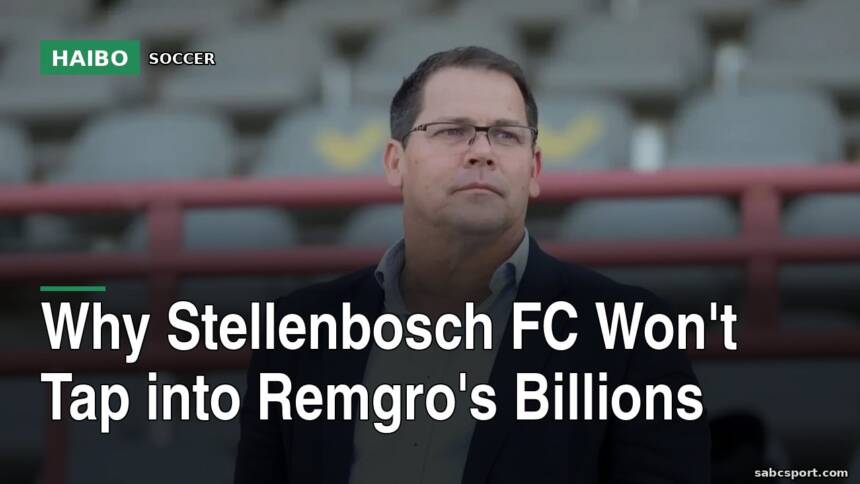
You see how the timeline has been vibrating about club finances lately. Usually, we get told that a new signing costs more than a small town’s GDP, but then Stellenbosch FC CEO Rob Benadie stepped up to explain why his team isn’t tapping into Remgro Group’s vast financial resources, or the personal wealth of billionaire chairman Johann Rupert.
What The Silence Actually Costs Us
The club is publicly committed to a financially independent operation that does not rely on those funds. That is a massive pivot from the standard playbook where sponsors print cheques and owners drop billions just to keep the lights on. If you ask me, it reads like a deliberate choice to build something that actually survives without begging the boardroom for rescue money.
Building Without The Safety Net
But let’s be realistic for a second. The streets are saying this sounds great until transfer windows close and rival clubs start buying experienced professionals while Stellies are still waiting for youth prospects to mature. I don’t understand why some people assume financial independence automatically means competitive stagnation, though. Maybe it just means paying players what the actual revenue covers instead of what a corporate ledger allows.
Ownership Pride Over Quick Fixes
The facts we have are pretty thin right now, which honestly makes me lean harder into my original point. We do not know the exact operating budget, the player wage structure, or how many games they plan to win with this model. All we know is that Benadie explained the club will intentionally avoid accessing those corporate coffers. That silence around the details is doing heavy lifting here, leaving us to wonder if this is a long-term strategy or just a very public statement of intent.
One could speculate it reflects a conservative governance stance designed to protect the club from sudden corporate shifts, but I reckon it’s simpler than that. It’s about ownership pride. When ordinary supporters watch clubs get dragged into merger drama or sponsor boycotts, watching a CEO explicitly reject unlimited backing feels like a rare moment of accountability.
It’s easy to mock a club for refusing free money when you aren’t the one balancing the books every single month. The industry loves a flashy takeover announcement, but sustaining a team on its own merits requires a different kind of bravery. I bet the board prefers the grind of organic growth over the temporary thrill of instant success, even if it means playing catch-up on the pitch for a season or two.
So here is where I leave you, because the comment section needs to settle this properly. Does refusing unlimited corporate backing actually build a stronger, more resilient football club, or does it just guarantee you will always finish behind teams that play with daddy’s credit card?
Reporting referenced here draws from SABC Sport and Briefly.co.za.
Vote in the Facebook comments — results and your best takes become tomorrow's article.