Frau Troffea Started Dancing in 1518 and Trapped a City
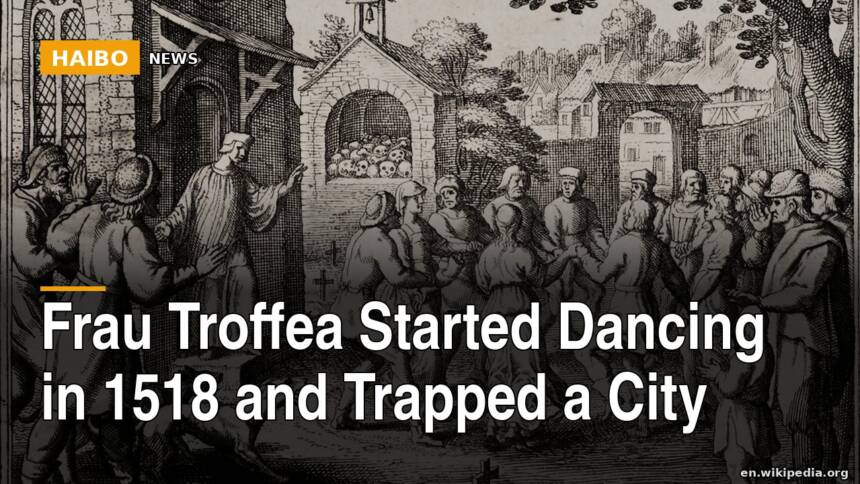
In July 1518 a woman named Frau Troffea started dancing and wouldn’t stop, so officials ordered entire crowds to keep moving too, Chillers.
It sounds like a fever dream, but historical records say Troffea stepped onto the cobbled street outside her home on July 14 without any music playing and just began.
Within days, more than 30 neighbors were mimicking her movements, and soon the streets were filled with people trapped in a rhythm they could not control.
I cannot get over that these were real people suffering through spasms and convulsions while their bodies grew drenched in sweat and their eyes went completely blank.
By August, anywhere between 50 and 400 individuals were afflicted, collapsing from extreme exhaustion, hunger, and thirst, or simply giving in to heart attacks.
Honestly, seeing descriptions of blood pooling into swollen feet until victims actually bled into their shoes makes my stomach turn just reading the notes.
Wait, wait, wait — you would think the city authorities would step in to stop the madness immediately, but instead they handed the crisis over to physicians.
Those medical men prescribed a remedy that still baffles me today: the sufferers were told to simply dance themselves free of whatever illness had struck them.
To help them stay upright, guild halls were apparently refurbished and strong men were hired to support the exhausted dancers, but that plan backfired spectacularly.
The panic spread so fast that residents began fearing divine punishment from Saint Vitus, which explains why so many joined the epidemic trying to cleanse their sins.
Did They Actually Dance Themselves to Death?
There is massive disagreement among historians about whether anyone actually died during this summer-long episode, because the city’s own chronicles do not list any fatalities.
Author John Waller argues that around fifteen people per day succumbed at the peak, which would push the total well into the hundreds, but his data comes from later accounts rather than contemporaneous reports.
If those daily death tolls are true, the tragedy is horrifying, yet we have no definitive proof from the time that anyone lost their life.
Modern experts debate stress-induced mass hysteria versus ergot poisoning, though no one can agree on what triggered such violent, contagious movement in the first place.
Similar episodes happened elsewhere, including a medieval belief in Saxony that dancing was divine judgment, and an Apulia account where a tarantula bite required a shimmery cure.
Historical writers like Athanasius Kircher even backed the idea that venom forced people to shimmy to specific music, which feels equally unhinged when you sit with it.
Contemporaries also blamed overheated blood, believing continuous dancing followed by rest would cool the system, a theory that treats the human body like a pot on a stove.
The outbreak finally subsided in September, leaving behind a mystery that medical science still struggles to explain fully.
Would you have trusted the doctors to prescribe more dancing, or would you have run straight to the shrine of Saint Vitus?
Source: Wikipedia’s article on “Dancing plague of 1518”. The facts are theirs; the words are ours.
Vote in the Facebook comments — results and your best takes become tomorrow's article.