A Shattered Leg At Saratoga Led To A Boot Monument With No Name
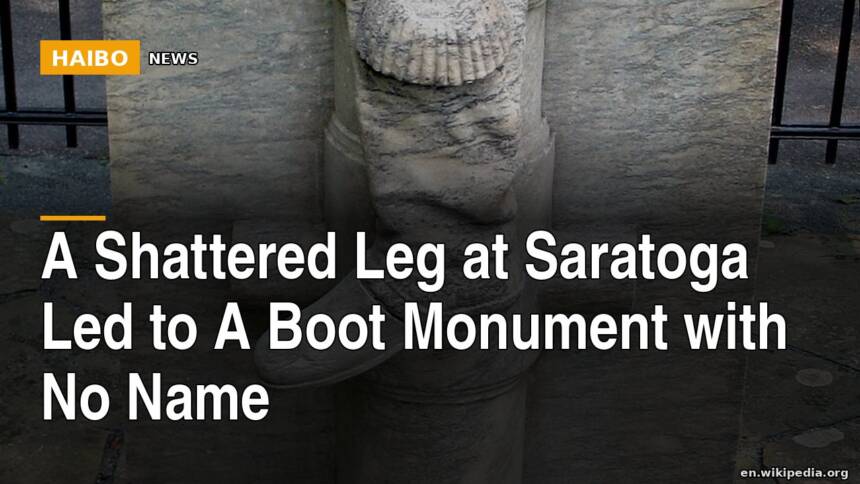
History really forgets its manners when we decide to memorialise a missing boot instead of the general who owned it. The marker sits at the southern end of the redoubt and never mentions his surname. I simply cannot wrap my head around how a political betrayal turned into a quiet garden sculpture.
We are looking at October 7, 1777, when a sudden charge flipped the Bemis Heights clash. A stray bullet tore through a commander’s left leg while his mount collapsed onto the fractured bone. Rather than allow surgeons to remove it, he forced doctors to reset the limb poorly.
The fighting occurred near Freeman’s Farm earlier that season, though historians still debate his exact influence during those initial exchanges. When the second engagement began, temporary commanders stripped his authority and handed control to Major General Benjamin Lincoln. Orders sent to pull him back from the front lines simply arrived too late.
He ignored the retreat signals and personally led troops into a heavily defended position commanded by Lord Balcarres. The offensive succeeded, but the battlefield price literally crushed his lower extremity under the weight of a fallen animal. Wait, wait, wait — I think modern physiotherapists would lose their minds trying to navigate that kind of emergency triage.
How Did A Single Shoe Win The Argument?
Commanding officers barely mentioned his contributions in official reports, while Congress consistently skipped him for a proper rank boost. I find it absolutely hilarious that bleeding for a cause eventually makes you despise the side you just bled for. The mounting frustration grew louder when eight court-martial charges landed on his desk.
His wife belonged to a prominent family that openly backed the crown, which apparently made political espionage feel acceptable. Enemy commanders promised £20,000 if he handed over their key riverside fortress, and he eagerly started sharing secret maps. My bet is that treason rarely feels criminal until the financial promises arrive.
He arranged secret meetings with British Major John André to coordinate the entire surrender operation. The British operative got intercepted returning toward New York, and the entire West Point scheme slipped into American hands. The West Point attack details were discovered, forcing a rapid flight to the British army.
The war officially concluded in 1783, yet the public memory struggled to reconcile his early victories with his later defection. Veteran committees gathered in 1882 to discuss carving a hilltop memorial for the fallen fighters. They positioned a simple wooden stake exactly where the injured foot had fallen.
Why Leave The Top Off The Statue?
A former Union major general then stepped in and decided the empty niche needed filling with something far more pointed. He remembered hearing how the wounded commander once queried locals about their true opinion of him. The response reportedly suggested carving the damaged limb into a tribute while hanging the remaining flesh elsewhere.
The sculptor followed those orders and cast a clean white marble boot to sit on the grass. The chosen joint represents the sole body part that refused to defect during the war. Honestly, leaving the toe off entirely might be the smartest design move in military history.
College students later showed that even perfect tributes attract theft. Young visitors chipped the front tip off the stone structure and carried it around campus as a souvenir until 1931. An anonymous graduate from a New York State educational institution blew the whistle, and a newspaper publisher quickly covered the repair costs.
Archival notes still suggest whether the final marker should have stayed near the northern ridge or shifted closer to the main defensive walls. Some archives point to 1972, while other records insist the relocation happened in 1975. I trust neither date completely, because moving monuments proves how much ground truth shifts.
Today the structure sits permanently at the southern end of the old fortifications, marking the exact spot where a shattered leg changed a campaign. It remains the only memorial dedicated to him across the entire country.
So tell me, Chillers, would you rather honour a complicated legacy with a full statue named in stone, or does a single shoe say everything we actually need to remember?
Source: Wikipedia’s article on “Boot Monument”. The facts are theirs; the words are ours.
Vote in the Facebook comments — results and your best takes become tomorrow's article.