The Bog Basin Where The River Meets The Water And The Sky Goes Wild
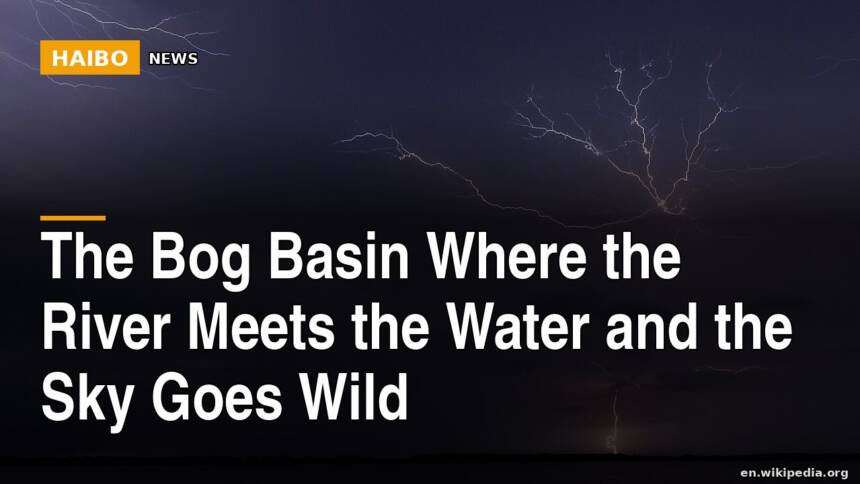
A marshy patch near the water drops lightning for nine hours straight, and I am completely drained.
Hold on, Chillers, because the record says it flashes for 140 to 160 nights a year. It happens over Lake Maracaibo where the Catatumbo River drops into the water. The local Barí language already named it the House of Thunder, and the atmosphere gets absolutely unhinged.
It burns for nine hours each time, dropping between 16 and 40 flashes per minute. Wait, wait, wait — eish, my brain just refuses to process that kind of stamina. NASA satellites count roughly 250 instances of lightning per square kilometre annually, making it the densest electrical activity on the entire planet.
It even pulls off dry lightning during the summer months without dropping a single drop of rain. I cannot get over how the clouds manage to short-circuit themselves when there is zero moisture falling. Honestly, I still cannot wrap my head around how the sky stays charged without any precipitation.
How do mountains trap a strobe-light sky?
Massive storm clouds spawn at an altitude of more than 1 km. Winds blow across the lake and surrounding swampy plains before meeting the mountain ridges. They slam straight into the Perijá Mountains, which rise to 3,750 m, and I cannot believe the rocks did not just shatter under that pressure.
Russian researcher Zavrotsky investigated the area several times and concluded that cold and warm air currents collide around the area. He also speculated that uranium sitting deep in the bedrock might be acting as an isolated power source. Honestly, I would pay good money to watch him argue with the guys who brought out the gas detectors.
Between 1997 and 2000, several studies argued that methane rising from the swamps and massive underground oil deposits were causing the sparks. The theory predicted heavier strikes during dry months, but the actual records show the opposite pattern. I guess nature simply ignores our neat little mathematical models.
We don’t judge bad science here, but it really shows how hard it is to guess what Mother Nature is doing next. A team from the Universidad del Zulia tracked everything from wind patterns to convective energy. They found relationships with El Niño and the Inter-Tropical Convergence Zone, showing the climate drivers are clearly interacting.
These ranges enclose the plain from three sides, forcing the air masses together. The resulting thunderstorm activity generates a great quantity of ozone, though nobody agrees whether that actually helps the atmosphere above us. My bet is that the chemical fallout matters way less than the sheer volume of sparks lighting up the dark.
Did poets really mistake burning ships for storms?
Colonial sources called it the Lighthouse of Maracaibo because you could spot it from miles away. Humboldt wrote about it back in 1826, and Italian geographer Codazzi described it as continuous lightning directing boats safely. The Wayuu people treat it as a spiritual signal demanding respect.
The strikes stopped dead for three months in early 2010 after a dry spell hit. Experts worried the whole display might vanish forever. I would miss watching the sky throw a permanent rave.
A 2016 study showed we can actually forecast these flares up to a few months ahead by tracking the lake jet stream. They discovered an index combining wind speeds and potential energy predicts the chaos with scary accuracy. We finally got a radar gun pointed at the apocalypse.
The flashing sky even claims a spot on regional government symbols and the local anthem. I love that they decided to put pure atmospheric chaos on official paperwork. Everyone living nearby gets a daily soundtrack for their thunderstorms, and honestly, that is a beautiful flex.
Literary fans once guessed that a Spanish playwright accidentally captured the storm during a Caribbean battle. Turns out he was just describing flaming vessels sinking, so the sky gets no credit for that scene.
Still, staring at those numbers makes me wonder if we are pushing the limits too far. If modern drilling sucks up all that ancient methane and oil, do you think the sky will finally calm down? Or does the Earth just refuse to lose its punchline?
Source: Wikipedia’s article on “Catatumbo lightning”. The facts are theirs; the words are ours.
Vote in the Facebook comments — results and your best takes become tomorrow's article.