Why Your Brain Wants To Bite Adorable Things Without Harm
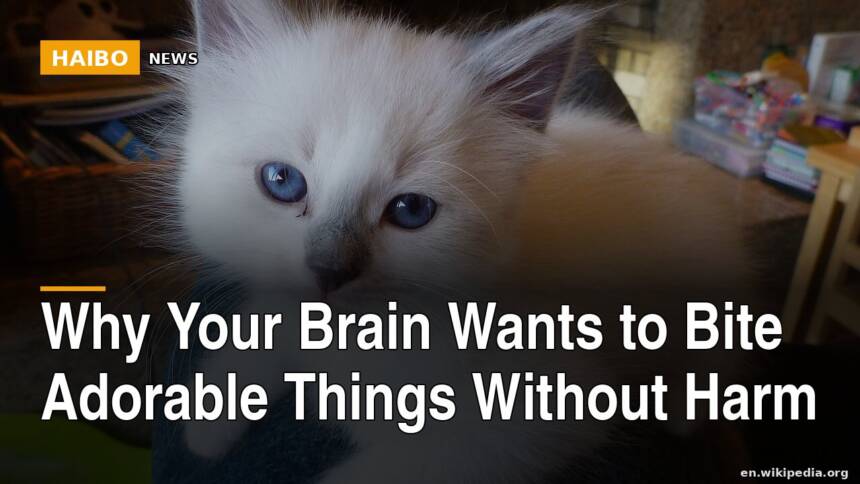
About half of adults feel a sudden urge to bite something adorable, and I’m done pretending my jaw doesn’t clench at puppies.
This weird impulse goes by cute aggression or playful aggression. You might clench your fists or want to pinch an adorable baby without any desire to cause harm. I’ve definitely caught myself thinking I could devour a kitten whole, and honestly, that reads to me like a problem.
Why does the brain try to devour the little ones?
Social psychologist Oriana Aragón and her team labeled this madness in a 2015 paper. They knew asking about every behavior was too hard, so they grouped reactions like gritting teeth or claiming you want to eat someone up. I respect the shortcut, even if it makes me look crazy.
Researchers call this a dimorphous display where positive and negative expressions collide in a disorganized manner. You might feel joy and anger simultaneously, leading to an urge to squish or bite the cuteness. I am not okay because I feel exactly this whenever I see a chubby-cheeked toddler.
EEG scans show emotion and reward centers lighting up when people view baby animals, with signals growing stronger for cuter faces. The orbitofrontal cortex ramps up activity within one-seventh of a second of spotting a baby face, which is faster than I can blink. I don’t understand how biology moves that fast while I’m stuck on a meme.
Hormones drive this double bind through oxytocin and vasopressin interacting in the brain. Oxytocin surges to create feelings of affection, while vasopressin pushes you to defend what feels vulnerable. Some mammals like grizzly bears use similar aggressive instincts to shield their young, and I’m suddenly very grateful for my self-control.
How do hormones flip the switch between cuddles and combat?
People recognize this urge with terms like the Tagalog gigil and the Malay geram. Geram captures the love-hate itch to squeeze and a dissatisfaction I know well. Thai speakers describe enjoying a toothy hunger toward the cute, while Chamorro terminology focuses on pinching chubby appearances until you smother them in kisses.
Evolution likely wired this response to help humans survive as an altricial species with low reproductive rates. Parents must invest heavily in few offspring, so infant traits like big eyes and round faces trigger deep caregiving drives. I can’t argue with survival logic, even if my brain keeps trying to eat the evidence.
Some theorists suggest the bite impulse acts as a cooling mechanism to regulate overwhelming positive emotions, like crying when happy. Others postulate that staring too long at pure adorableness could leave parents negligent to immediate threats like a wild animal nearby.
Honestly, both theories save lives, but I’m sticking to the theory that my brain just needs a reset button.
Babies come pre-loaded to hijack our attention using social releasers such as smiling, crying, and making eye contact to secure attachment. The intensity of this response scales with perceived cuteness, meaning the same protective obsession extends from human infants to puppies and kittens sharing those features. I surrender completely to the gradient whenever I encounter a fluffy creature.
The intersection of reward circuits and defensive instincts creates a loop where we want to protect and squeeze the same thing. I struggle to reconcile how the same chemistry that makes me want to cuddle also triggers the fantasy of eating everyone. Chillers, tell me: do you fight the urge to bite cute things in public, or do you let the imaginary gnawing thoughts run wild?
Source: Wikipedia’s article on “Cute aggression”. The facts are theirs; the words are ours.
Vote in the Facebook comments — results and your best takes become tomorrow's article.