Flaming Balls And Snowy Streets: The Sport That Actually Exists
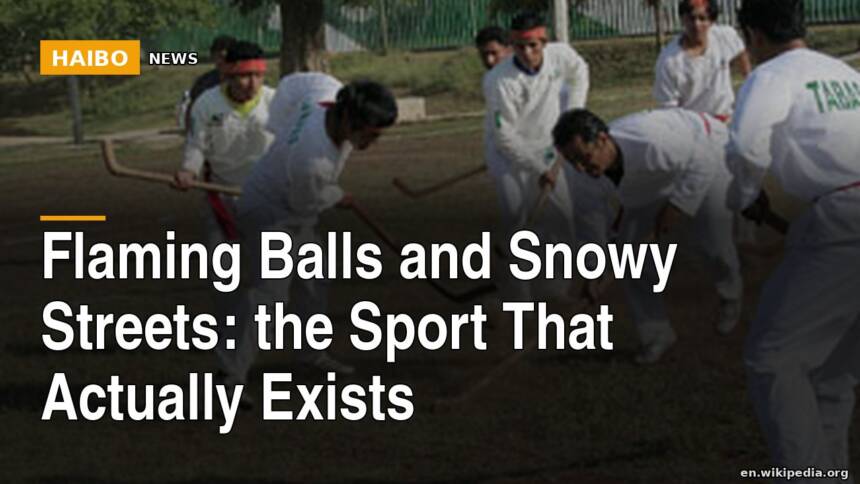
Indigenous Mexicans invented a sport where players chase a flaming wooden ball through the streets to properly represent the sun.
I need to pause before we even discuss the flames. Eish, this game traces back up to 3500 years in Michoacán, and early athletes actually packed hundreds of monarch butterfly cocoons into each sphere. I cannot get over that we went from insect husks to solid timber without skipping a single step.
Why Are We Running With Sticks?
The squad lines up with five or more members, swinging curved sticks at a sphere measuring exactly 12─14 centimetres across. Historically, they raced along four streets that stretched about 150─200 metres long. I am still trying to wrap my head around how anyone kept their eyes open while dodging hardwood at top speed.
The record says this match mimics an old legend about day fighting night, where that glowing orb stands for the sun and the athletes show the movement of the universe. You can actually spot that exact scene painted on the walls of the Palacio de Tepantitla at Teotihuacan. My bet is the choreography got heavier when the grass turned to frost.
When Does The Field Actually Catch Fire?
A specific version called pasárutakua lets athletes compete after dark using a wooden ball soaked in pine resin or modern petrol until it ignites. Honestly, I think the whole setup stays grounded in that same day-and-night myth, even if the heat level definitely spikes when your gear starts dripping flame. I’ve got to give it to them for organizing a full league alongside multiple local crews and roughly 800 athletes across Mexico.
Modern groups shifted the matches into regular parks, which sounds manageable until you notice the surface list includes actual snow. Latin students at Cornell University once dragged the whole competition onto frozen ground just to test the limits. The surfaces really do change depending on where the leagues pop up, and I respect the commitment to ice skating with curved sticks.
Despite all that chaos, roughly 800 players are keeping the tradition alive across Mexico right now, based on records from 2010. A dedicated league runs alongside several practicing communities, though the sport sits on a list of 150 pre-Hispanic Mexican games that experts worry will vanish entirely. If you ask me, watching a team fight for survival against extinction in a stadium full of smoke is exactly the kind of raw spectacle we need.
It honestly feels like a tactical flex to swap delicate caterpillar shells for industrial fuel in the span of a few centuries. I am sitting here wondering if the original players ever imagined their descendants would literally set the pitch on fire. My brain refuses to process that leap without a safety manual.
The sources confirm the playing field shifts wildly, sometimes landing on actual snow instead of dirt. We usually treat tradition like glass, but these athletes clearly treat it like a puzzle box. I genuinely admire how they refuse to lock themselves into one single environment.
Chillers, would you rather see a centuries-old sport burn out quietly or actively fight to stay alive with flaming balls and icy fields?
Source: Wikipedia’s article on “Pelota purépecha”. The facts are theirs; the words are ours.
Vote in the Facebook comments — results and your best takes become tomorrow's article.