Tourists Queue For Fried Tarantulas In Skuon While Mexico Bans The Tacos
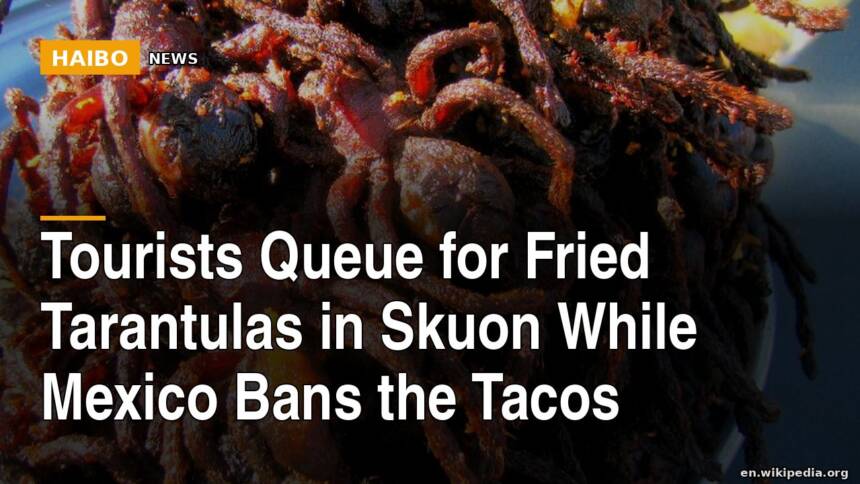
Tourists line up for the crispy arachnids in Skuon, and reports say the heads actually pack in some delicate white meat.
You see me scrolling through food reviews and almost spit out my taxi fare when I landed on this. If you ask me, we have enough bugs in Mzansi without turning our streets into a buffet, but Cambodia really went off script here. I don’t understand how a country turns an arachnid into a main attraction, honestly. We usually run from anything that crawls, let alone fry it.
The spot is Skuon, a market town that sits 75 kilometres away from the capital. Tourists flock there to buy these crispy treats, and while Phnom Penh offers them too, Skuon is where the real action happens.
These aren’t tiny house pets crawling on your wall; we’re talking a-ping tarantulas the size of a full human palm. Travel books point to Haplopelma albostriatum, which folks have called the edible spider for well over a century.
Someone tosses the beast in MSG, sugar, and salt before tossing it into hot oil. You fry crushed garlic until it smells good, drop the spider in alongside, and cook until the legs turn stiff and the middle stops running. Hold up — you actually fry the crushed garlic until it smells good first, then drop the spider in to cook right alongside it. That cooking method sounds chaotic, but I respect the hustle.
Nobody can pinpoint exactly when folks decided to fry arachnids, though some point to desperation during Khmer Rouge rule when supplies ran dry. The snack’s massive popularity looks like a newer trend, perhaps kicking off only in the late 1990s. I’m still processing the Khmer Rouge connection. It makes total sense that starvation births weird snacks, but watching it become a tourist draw is wild.
Back in 2002, a single spider cost about 300 riel, which works out to roughly US$0.08. That’s pocket change, yet tourists keep lining up for a palm-sized portion that defies every dinner table rule we grew up with.
But what does it actually taste like?
Reports describe the flavour as bland, comparing it to a weird mix of chicken and cod. You get a crunch from the outside giving way to a soft interior, though the legs offer almost no meat at all.
The head and thorax hide delicate white meat inside, which seems worth the risk. The abdomen, however, contains a brown paste made of organs, possibly eggs, and excrement, so many folks just skip that section entirely.
I’m not sure why anyone would pay to eat excrement, even if it’s buried inside a crusty shell. My bet is the white meat carries the whole experience, leaving the rest as optional trauma. Honestly, skipping the guts feels like the smart play. If you’re paying for protein, why would you voluntarily swallow waste?
Over in Mexico, tarantulas have been offered in tacos with guacamole, which definitely sounds like a wild food experiment. Authorities eventually stepped in because local law bans selling many spider species for food, shutting those vendors right down. I have to give credit to Mexican authorities for stepping in. I have to give credit to the officials for stepping in, since local laws strictly forbid selling those spiders for food anyway.
Why would you risk the abdominal paste?
Villages north of Skuon raise them in ground holes, while other collectors track them down in surrounding woods. Villages north of town either breed them in dirt burrows or hunt them down in the nearby woods.
So, Chillers, would you bite into a crispy palm-sized spider for the price of a sweet candy, or does that brown paste sound like a dealbreaker for everyone?
Source: Wikipedia’s article on “Fried spider”. The facts are theirs; the words are ours.
Vote in the Facebook comments — results and your best takes become tomorrow's article.