How An Ocean Louse Replaced Its Host For A Tongue
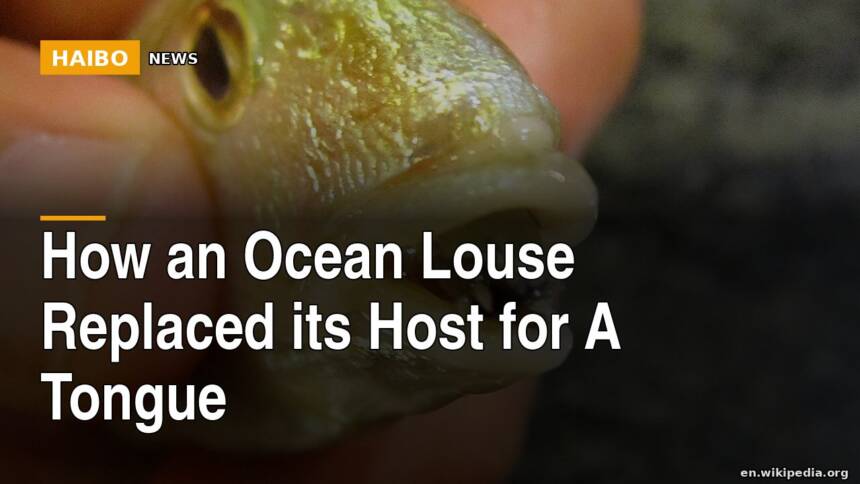
A parasite slips past gills, severs tongue blood vessels, and takes over the leftover tissue stub.
The record confirms their habitat spans the Atlantic and Pacific Oceans, and I don’t understand how nature designed them. These isopods swim through the Atlantic and Pacific Oceans, and grown specimens can reach up to an inch long.
They slip past a fish’s gills as juveniles before forcing their way inside the mouth cavity. Once locked in place, they cut off every artery supplying the tongue. I cannot wrap my head around how that sequence even makes biological sense.
What Happens When The Tongue Drops Off?
Eish, starved of circulation, the organ dies and eventually detaches entirely. The parasite then anchors itself to the leftover tissue stub. I am physically struggling to process that level of anatomical theft.
Every single one of these parasites hatches as a male, and only transforms into a female after hitting at least 0.4 inches. The first male to claim a host sets up camp, but a rival male triggers a full sex swap.
Is It A Prosthetic Or A Parasite?
Once settled, the isopod grazes on blood and mucus while surviving for up to three years. It expands to match the growing jaw, essentially stretching to fit the new environment. If you ask me, that kind of biological flexibility should be illegal.
Common catches like snapper and menhaden frequently carry these hitchhikers. The parasites survive solely by attaching to a living host, meaning abandonment usually spells doom. I respect the hustle, but the stakes feel brutally high.
Some researchers suspect the first female releases chemical signals to stop later arrivals from changing sexes. Some researchers suspect chemical signals stop later arrivals from changing sexes, which might explain the setup.
There are 383 members in the wider Cymothoidae family, but out of all the Cymothoa species, only this one completely swallows the host’s tongue.
Other cousins prefer gills, scales, or even burrowing into flesh. Other cousins prefer gills, scales, or even burrowing into flesh, and I respect the specialization.
Records show mixed results on the damage, with some noting underweight conditions and others pointing to functional replacements. While some studies suggest a prosthetic function, Lanzing and O’Connor reported that heavily infested fish often end up underweight.
When the host fish finally passes away, the parasite usually slides out and leaves the oral cavity behind. Field observations of this exact moment remain totally unrecorded, so nobody knows what happens next. I guess the ocean keeps that secret.
Female specimens carry more than 400 eggs in a ventral pouch, though biologists still debate whether they lay one massive batch or multiple smaller ones. Their exact lifespan remains equally murky despite the three-year estimate floating around textbooks.
Cymothoa exigua was first named by Linnaeus in the 1700s, and much of the taxonomy for mouth-attaching species is still unclear. So tell me, Chillers: would you rather lose a body part to a stranger, or keep fighting for a chance at normalcy?
Source: Wikipedia’s article on “Cymothoa exigua”. The facts are theirs; the words are ours.
Vote in the Facebook comments — results and your best takes become tomorrow's article.